If you’ve been looking for a simple way to improve your focus, memory, or mental clarity, there’s a good chance you’ve already stumbled across The Brain Song. The premise certainly grabs attention: listen to a short audio track each day and use carefully selected sound frequencies to influence the way your brain works.
But does The Brain Song work, or is the neuroscience simply clever marketing?
In this The Brain Song review, we’re taking a closer look at what the program actually offers, how it is supposed to work, and—more importantly—what the science behind its claims really says.
Table of Contents
The Brain Song is based on the concept of brainwave entrainment and places particular emphasis on gamma brainwaves and Brain-Derived Neurotrophic Factor (BDNF). These aren’t imaginary scientific terms invented to sell an audio file. Gamma activity is a genuine area of neuroscience research, while BDNF is an important protein involved in neuronal function and neuroplasticity.
However, that doesn’t automatically mean listening to The Brain Song will improve your memory or transform your ability to concentrate.
There is an important difference between having a scientifically plausible idea behind a product and having clinical evidence that the product itself works as advertised.
That’s exactly what we’re going to examine.
In this review, we’ll look at how The Brain Song works, what you actually receive, its potential benefits and limitations, and the evidence behind its more ambitious claims. By the end, you should have a much clearer idea of whether The Brain Song is worth trying—or whether your money would be better spent elsewhere.
What Is The Brain Song?
Imagine being told that supporting your memory and focus could be as simple as putting on a pair of headphones and pressing play. No puzzles, complicated brain-training exercises, or handfuls of supplements. That simplicity is what has made The Brain Song such an intriguing proposition.
The Brain Song is a digital audio program designed around the concept of brainwave entrainment. Rather than asking you to actively train your brain, the program uses structured sound patterns intended to influence brainwave activity while you listen.
The idea behind it is surprisingly straightforward.
Our brains produce patterns of electrical activity known as brainwaves. Different patterns are associated with different mental states. The Brain Song focuses particularly on gamma brainwave activity, which has attracted scientific interest because of its association with cognitive processes such as attention, learning, and memory.
The program also makes another interesting connection: Brain-Derived Neurotrophic Factor (BDNF). BDNF is a naturally occurring protein involved in neuronal health, neuroplasticity, learning, and memory. The product’s creators propose that its audio technology can encourage brain activity associated with BDNF and cognitive performance.
And this is where our The Brain Song review gets interesting.
Gamma waves and BDNF are genuine subjects of neuroscience research. Brainwave entrainment is also a real phenomenon. However, the existence of research into these mechanisms doesn’t automatically prove that one particular audio recording can produce the cognitive benefits being advertised.
That distinction matters.
From a practical perspective, The Brain Song is remarkably simple. You receive digital access to an audio track, listen through headphones, and incorporate the session into your daily routine. There are no physical products to take and no elaborate training program to follow.
That low-effort format is arguably one of its biggest attractions. If you’re already curious about brainwave audio, meditation, or non-pharmaceutical approaches to improving concentration, the prospect of simply listening to an audio track each day is easy to understand.
But an appealing concept and an effective product aren’t necessarily the same thing.
So does The Brain Song work, and what exactly is supposed to happen in your brain while you’re listening?
That’s what we’ll examine next.
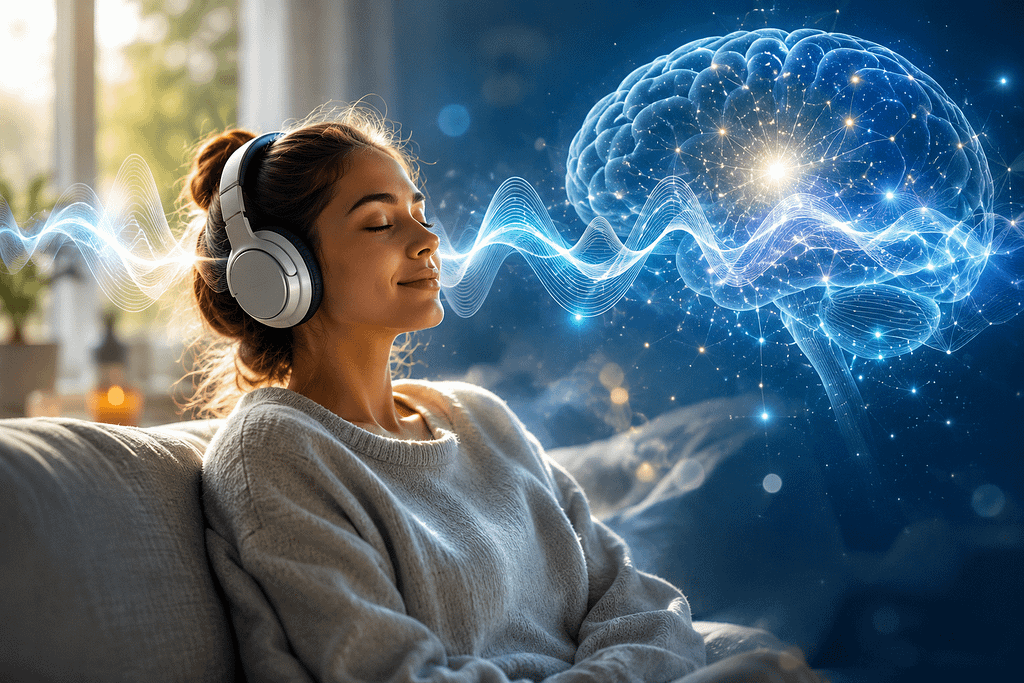
How Does The Brain Song Work?
What makes The Brain Song particularly appealing is that it doesn’t ask you to overhaul your routine.
There are no complicated exercises to learn. No lengthy meditation sessions to master. And no new daily regimen that becomes another item on an already overflowing to-do list.
Instead, the concept behind The Brain Song is surprisingly simple: you listen.
The audio is designed around a phenomenon known as brainwave entrainment. When the brain is exposed to repetitive rhythmic stimulation, its electrical activity can begin to synchronize with—or “follow”—aspects of that external rhythm.
The Brain Song uses this principle with a particular emphasis on gamma-frequency brain activity.
Why Gamma Brainwaves?
Gamma waves are among the fastest brainwave patterns and have attracted considerable scientific attention because they are associated with higher-level cognitive processes, including attention, information processing, learning, and memory.
This is where The Brain Song becomes more interesting than simply listening to relaxing music.
The idea is that carefully structured auditory stimulation may encourage the brain to engage with particular frequencies. Rather than consciously trying to “train” your brain, you simply listen to the audio and allow the auditory stimulation to do the work in the background.
For someone who struggles to stick with complicated routines, that’s an attractive proposition.
Put on your headphones. Press play. Listen.
That’s essentially it.
What About BDNF?
The Brain Song also draws attention to Brain-Derived Neurotrophic Factor (BDNF), a protein involved in the growth, maintenance, and adaptability of neurons.
You can think of BDNF as one of the substances that helps the brain maintain its ability to adapt and form new neural connections—a property known as neuroplasticity.
Naturally, that makes BDNF particularly interesting when we’re talking about learning, memory, and healthy brain function.
However, there’s an important distinction to make in this The Brain Song review.
Research into gamma-frequency auditory stimulation is real and increasingly intriguing. Studies have demonstrated that rhythmic auditory stimulation can produce measurable gamma entrainment in the brain, and some human studies have reported effects on attention, working memory, sleep, and other cognitive measures.
But the results aren’t universal.
That means we shouldn’t interpret the underlying neuroscience as proof that The Brain Song itself will produce a specific improvement in memory, concentration, or BDNF levels for everyone.
What it does give us is an interesting scientific rationale for why this kind of audio is being investigated in the first place.
And That’s What Makes The Brain Song Tempting
Perhaps the biggest attraction isn’t the promise of some overnight transformation.
It’s the effort-to-potential-benefit ratio.
Most things we do to support cognitive health require substantial effort and consistency. Exercise takes time. Learning new skills takes work. Meditation takes practice.
Listening to an audio track is considerably easier.
And that’s ultimately the proposition behind The Brain Song: incorporate a brief listening session into your normal routine and explore whether this form of brainwave audio makes a noticeable difference for you.
You could listen while relaxing in the morning, during a quiet break, or as part of your evening routine. There’s no complicated equipment to buy and no course material you need to study before getting started.
So, does The Brain Song work?
The underlying field of auditory brainwave entrainment is certainly more interesting than the idea might initially sound. However, whether this particular program lives up to its promises is the question that matters most.
And that’s exactly what we’ll investigate next.
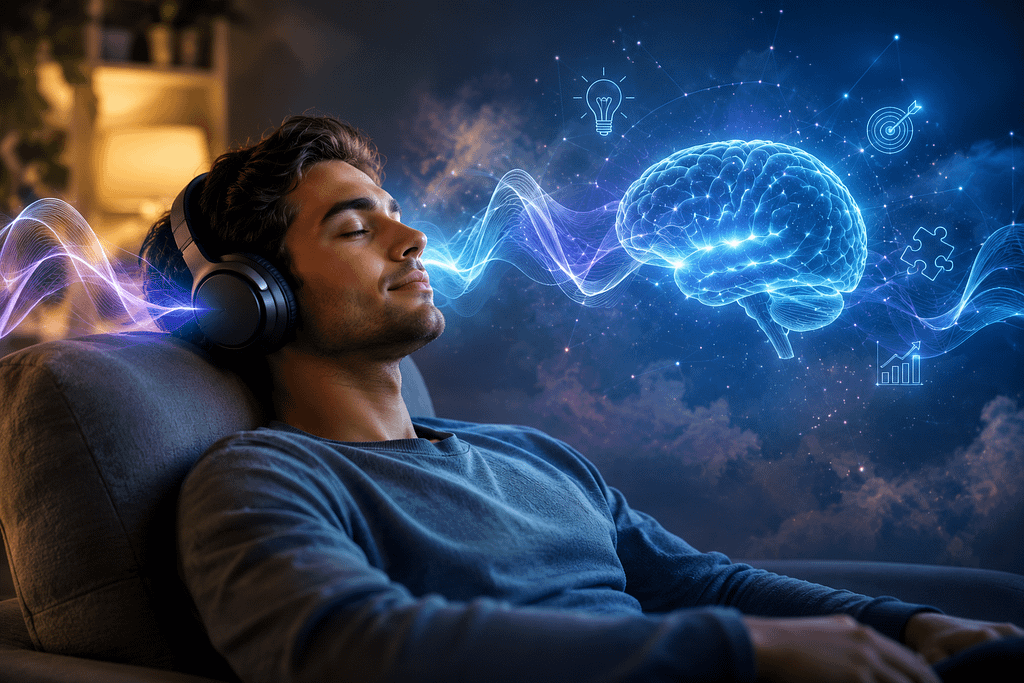
Does The Brain Song Work?
This is the question that really matters.
The Brain Song sounds intriguing. The routine is remarkably easy. And the neuroscience behind gamma-frequency stimulation is a genuine field of research.
But does The Brain Song work well enough to justify spending your money on it?
The answer is more nuanced than a simple yes or no.
There Is Real Science Behind the Concept
One reason The Brain Song caught our attention is that it isn’t based on a completely fabricated scientific concept.
Researchers have been investigating gamma-frequency stimulation and brainwave entrainment for years. Gamma activity is associated with cognitive processes such as attention, learning, memory, and information processing.
More recent research has made the subject even more interesting.
Studies examining auditory gamma stimulation have found that rhythmic sound can produce measurable changes in brain activity. Some experiments have also reported improvements in measures such as attention and working memory.
That makes the basic premise behind The Brain Song scientifically interesting.
And for the person using it, the proposition couldn’t be much simpler:
Put on your headphones. Press play. Listen regularly.
No complicated cognitive exercises. No hours of training. No major change to your daily routine.
For anyone interested in supporting focus and cognitive performance without adding another demanding habit to their day, it’s easy to see the appeal.
But Does That Prove The Brain Song Itself Works?
Not quite.
And this is an important distinction in our The Brain Song review.
Research showing that the human brain can respond to rhythmic auditory stimulation does not automatically prove that The Brain Song itself will improve your memory, increase your concentration, or produce a particular change in BDNF.
At present, we haven’t found an independent published clinical trial testing this specific commercial audio program.
Research on auditory gamma stimulation in humans is promising, but the results remain mixed. Some studies have reported cognitive benefits, while others have found little or no measurable improvement.
Individual responses can also vary.
So if you’re expecting to press play tonight and wake up tomorrow with photographic memory, The Brain Song probably isn’t the magic button you’re looking for.
But that’s not necessarily the right way to judge it.
The Better Question: Is It Worth Trying?
This is where our view becomes considerably more favorable.
The Brain Song offers an unusually simple way to experiment with a fascinating area of neuroscience without requiring much time or effort.
You’re not committing to months of classes.
You’re not buying expensive equipment.
You’re not trying to squeeze another elaborate self-improvement routine into your schedule.
You’re essentially adding a short listening session to your day and seeing whether you notice a meaningful difference in areas such as focus, mental clarity, or your ability to settle into concentrated work.
And ultimately, personal experience is going to matter here.
The scientific literature can tell us that auditory gamma stimulation can influence brain activity. It cannot tell us exactly how you will respond to one particular audio program.
Who Might Find The Brain Song Most Interesting?
The Brain Song may be particularly appealing if you:
- struggle to stay focused during demanding tasks;
- are interested in brainwave entrainment or neuroscience;
- already use meditation, ambient audio, or binaural beats;
- want something that requires very little daily effort;
- are curious about gamma-frequency audio but don’t want a complicated program.
It is less compelling if you’re looking for a clinically established treatment for memory problems or cognitive decline. The Brain Song should not replace medical assessment or evidence-based treatment for cognitive symptoms.
For everyone else, the attraction is essentially its simplicity.
Listen. Continue with your day. Decide whether you notice a difference.
Our Verdict So Far
So, does The Brain Song work?
There is enough legitimate science surrounding auditory brainwave entrainment and gamma stimulation to make the concept worth investigating. However, there isn’t enough product-specific evidence for us to promise that The Brain Song will improve memory or focus for everyone.
And strangely enough, we think that’s a better reason to consider it than the extravagant promises sometimes made around brain-training products.
You don’t need to believe you’ve discovered a miracle brain hack.
You simply need to decide whether you’re curious enough to try a low-effort audio program based on an intriguing area of neuroscience and judge the experience for yourself.
If that sounds like you, you can take a closer look at The Brain Song, see exactly what the program includes, and decide whether it’s something you’d like to add to your daily routine.
See The Brain Song and How It Works →
Disclosure: This is an affiliate link. If you purchase through it, we may earn a commission at no additional cost to you.
The Brain Song Review: Is It Worth Trying?
After taking a closer look for this The Brain Song review, we can understand why the program has attracted so much attention.
The concept is fascinating. The routine is effortless. And unlike many approaches to improving focus and mental performance, The Brain Song doesn’t ask you to completely reorganize your life.
You simply put on your headphones, press play, and listen.
That’s perhaps its greatest advantage.
Most of us already know the conventional advice for keeping our brains in good shape: sleep well, exercise, eat properly, keep learning, and manage stress. All of those things matter—but they’re not always easy to maintain consistently.
The Brain Song asks for considerably less.
A short listening session can easily fit into your morning, a quiet break during the day, or your evening routine. There’s no complicated technique to master and no demanding training schedule to follow.
And if you’ve reached this point in our The Brain Song review, you’re probably asking one final question:
Is it worth trying for yourself?
We think it is.
The Brain Song offers a remarkably simple way to explore brainwave audio and gamma-frequency stimulation for yourself. Rather than wondering whether you’ll notice a difference, you can experience the program and make that judgment based on your own results.
After all, reading about brainwave audio can only tell you so much.
At some point, you have to press play.
Ready to Hear The Brain Song for Yourself?
If better focus, sharper mental clarity, and the possibility of giving your brain a little extra support sound appealing, take a look at The Brain Song today.
It takes only a few minutes to get started.
Get Access to The Brain Song Here →
Disclosure: This page contains affiliate links. If you purchase through our link, we may earn a commission at no additional cost to you.
